Monday, June 10, 2013

Blacks Are Singled Out for Marijuana Arrests, Federal Data Suggests

By
Published: June 3, 2013

WASHINGTON — Black Americans were nearly four times as likely as whites to be arrested on charges of marijuana possession in 2010, even though the two groups used the drug at similar rates, according to new federal data.

Read more at The New York Times
 

Thursday, May 9, 2013

Telling the IRP-6 Story


Today's post is written by Dr. Alan Bean, of the non-profit organization, Friends of Justice. The acronym IRP, used throughout the article, stands for Investigative Resource Planning.
Quick shameless plug: Are you an expert in the area of race and incarceration? Do you have a story to tell? Advice to offer? Do you have an example from your own experience? We’d love to have you as the next Contributor Spotlight! Contact us at: 6and44@gmail.com.

Telling the IRP-6 Story

This is a story about how prosecutorial tunnel vision created a tragic communication failure.  The criminal justice system exists to give everyone a chance to tell their story.  Juries decide who brings the best story to the table.  Bad things happen when the system amplifies one story while silencing the other.


The IRP-6 case is characterized by an unusually deep divide between the government’s story and the defendants’ story.  Such a wide gap is rare, 95% of federal cases are resolved short of trial because few defendants ultimately maintain their innocence.  If a federal case proceeds to trial it is either because the government isn’t offering much of a plea deal or because the defendants actually believe in their own innocence.


There are two ways of approaching the issue and everything depends on where you start.  It has been said that where we place our focus determines what we miss.

Are the IRP-6 defendants innocent or guilty?  If they are guilty, why do they claim to be innocent and why are their friends, family and church so convinced that they are?  If they are innocent, why is the government, represented by Assistant US Attorney Kirsch, convinced of their guilt, and why did a jury agree?

This is primarily a story about motivation and intention.  Why did the IRP-6 choose to engage with staffing companies, and why did these companies choose to engage with IRP?

The government began with the second question and that made it difficult to take the first question seriously.  The defendants and their supporters, naturally, begin with the first question and answer the second question accordingly.

Let’s address the motivation and intention issue from the perspective of the defendants.  At every stage of the process IRP executives were convinced that they were on the verge of closing business with a major governmental agency and the company’s negotiations with the NYPD and DHS appeared to be particularly promising. 

On the other hand, IRP had no money and, because the company was repeatedly asked to make significant tweaks to its software, it became necessary to hire a wide range of personnel.  The alternative was to give up their dream, lay off all their employees, declare bankruptcy and leave a steadily growing list of creditors unpaid.  Since they were perennially convinced that a government contract was just around the corner they persevered. 

IRP engaged the services of staffing companies because, for a small, black-owned IT company doing business shortly after the dot.com meltdown, conventional sources of start-up income simply weren’t available.  IRP made a good faith attempt to obtain funding from banks, angel investors and other sources of investment capital, but repeatedly came up empty.  They used staffing companies to bridge the gap between the present and a successful future because that was the only way of staving off catastrophic consequences.

Now we address the issue of motivation and intent from the perspective of the staffing companies.  Why did they choose to engage with IRP?  The government’s answer is the narrative the jury heard at trial.  The staffing companies chose to do business with IRP because they were told that IRP had a contract with the government, or was on the verge of closing a contract.  They believed this story, and the story proved to be false.  Because IRP was never close to closing a contract with a government agency, the prosecution argued, they misrepresented their business position to the staffing companies and this suggests that they never had a viable product and they knew it.  Their only motivation for using staffing companies, therefore, was to get free labor.  No one ever asked why IRP would want to get free labor to work on a bogus product but it was hinted that the goal was to provide work for their friends.

The government turned a deaf ear to the defendants’ story because they had already committed to the staffing company’s narrative.  It is important to note, however, that the staffing company’s narrative was largely shaped by the government itself.  FBI agents approached these companies and said, in effect, “Do you know that you are the victim of fraud?” 

In theory, the decision to prosecute follows on the heels of an investigation.  In the Department of Justice, the FBI investigates and the US Attorney’s Office prosecutes.  But the IRP case began in the US Attorney’s Office and wasn’t handed to the FBI until the Assistant US Attorney had already developed a theory of the case and a prosecutorial strategy.  The prosecution began when a former AUSA was approached by a friend who happened to be the principal of a staffing company that had engaged in business with IRP.  Asked to assist, and knowing that failure to satisfy his friend’s request might impact his own career trajectory, the ex-prosecutor wrote a letter to AUSA Kirsch explaining his theory of the case and suggesting how the case could be prosecuted. 

This relates to Harvey Silverglate’s famous assertion that the vagueness of federal law makes it relatively easy for a federal prosecutor to successfully prosecute any business person or public official, especially those in financial embarrassment.  The fact that the first grand jury to hear the government’s case refused to indict (a rare occurrence) suggests that the government’s initial theory of the case and its prosecutorial strategy were seriously flawed.  In other words, it is likely that both AUSA Kirsch and the defendants genuinely believed their very different narratives.

Why did the staffing companies decide to engage with IRP?  Part of the reason was, as the government suggests, that they realized that if IRP did sign a contract with an agency like the NYPD or the DHS, a staffing relationship with IRP could prove very lucrative in the long term. 

But there is another side to this story—the side the jury never heard.  Trial testimony suggests that a staffing company run a Dun and Bradstreet credit check on prospective clients that is largely related to a company’s payment history.  Since, in the beginning, IRP had no payment history to speak of, and since, as the story developed, their payment history became progressively worse, none of the staffing companies could justify a decision to provide staffing to IRP.  Or, if services were provided, it was only in the belief that, although IRP was a clear credit risk, the staffing company would win big if IRP’s cash flow reversed in a dramatic way.

In other words, IRP executives shared their genuine belief that they were poised to do major business with law enforcement agencies and the staffing companies decided to roll the dice.

Unfortunately, the jury never heard this explanation because the presiding judge barred the testimony of the only witnesses who could have explained how staffing companies evaluate potential clients and make business decisions.  Andrew Albarelle, a veteran of the staffing industry with a wide-ranging knowledge of the IT field, was prepared to testify that IRP’s outreach to staffing companies was reasonable and legal and that a quick review of the Dun and Bradstreet credit check would have revealed that IRP might have trouble paying invoices in the short term.  If these companies decided to do business with IRP anyway, Albarelle believes, it was because they were motivated by the potential for windfall profits.  In this view, the staffing companies entered into business with eyes wide open.

Because this testimony was disallowed, the government’s story was amplified, the defendants’ story was effectively silenced, and the jury responded accordingly. 

This story could be told by interviewing Mr. Albarelle, Mr. Silverglate, the defendants (or their attorney), AUSA Kirsch (if he is agreeable), former IRP employees, church members and friends of the defendants, staffing company representatives and FBI special agents Moen and Smith.   The story would be about the growing potential for prosecutorial tunnel vision and wrongful conviction created by the vagueness of federal fraud law.


Friday, January 25, 2013

HB1338


The House Bill concerning juveniles sentenced to long terms has a number! HB1338 ...
 
Here is the bill ... THIS IS THE BILL THAT WE NEED TO SUPPORT! Please share this with everyone you know.

There are 14 co-sponsors on this bill which is very encouraging considering that the senate bill (SB 5064) only has 2 ... I will update on hearing dates, location and times as they become available !!!

Sunday, December 16, 2012

For Lesser Crimes, Rethinking Life Behind Bars

 
TALLAHASSEE, Fla. — Stephanie George and Judge Roger Vinson had quite different opinions about the lockbox seized by the police from her home in Pensacola. She insisted she had no idea that a former boyfriend had hidden it in her attic. Judge Vinson considered the lockbox, containing a half-kilogram of cocaine, to be evidence of her guilt.
 
Read the article here.

Friday, July 20, 2012

ACLU's Page on The War on Drugs

The ACLU has created a great page on their blog dedicated to information related to the War on Drugs. If you don't already know, the War on Drugs, declared by President Nixon, was actually started for political reasons. Over the past 40 years, the War on Drugs has had devastating affects on the African-American community and has been the largest contributing factor to the explosion in the U.S. prison population. As a result of War on Drugs laws, African Americans are incarcerated at rates 10 times greater than whites, even though whites commit more drug offenses.

Check out the ACLU War on Drugs page, and get to work helping to change the laws that contribute to this injustice.

Image here.

Friday, July 13, 2012

A Day in the Life of the Death Penalty


Warren Hill
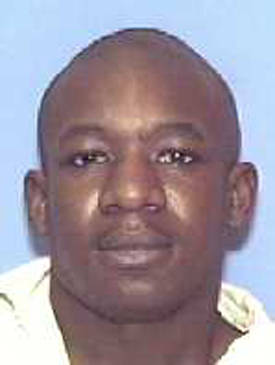
It saddens me that I'm not even shocked to see that both of these men, set to be executed, are black, and that they will be put to death in the Southern states of Georgia and Texas.  I don't know how "ya'll" do things in the South, but putting mentally handicapped men to death doesn't sound like justice to me.  It sounds like murder.

Check out the full article in The Atlantic here.

Yokamon Hearn
Warren Hill's photo is here with more on his case.

Yokomon Hearn's photo can be found here along with a petition through Amnesty International.

Monday, July 2, 2012

Institutional racism in the aftermath of the Rodney King beating

Institutional racism in the aftermath of the Rodney King beating

Prison in America

This powerful eight-part series on how Louisiana became the prison capital of the world, published by the Times-Picayune, is some of the best journalism I have seen about mass incarceration in America.  Go take a look.

You can watch the first video here.

Tuesday, June 19, 2012

Bryon Stevenson: We Need to Talk About an Injustice

This TED Talk by Bryon Stevenson, founder and executive director of the Equal Justice Initiative, is worth a listen. 

Tuesday, March 20, 2012

Blog In: If I was Trayvon Martin's Mother

Busy as I am, I needed to take time out today to participate in a Blog In in honor of young Trayvon Martin.
You've probably seen the news stories by now. Trayvon had walked to the store to get Skittles and an Arizona iced tea on the night of February 26th. On his way home, roughly 70 yards from his father's house in Sanford, Florida, he was gunned down by a volunteer neighborhood watch captain, George Zimmerman. Zimmerman is claiming self-defense even though he outweighed Trayvon by 100 pounds, was armed with a loaded handgun, and followed Trayvon despite the 911 operator telling him not to.

Trayvon, of slight build, was armed with a package of Skittles, an Arizona iced tea, and a cell phone.

The case will soon be a month old, Zimmerman has not been arrested, and young Trayvon Martin is dead.

When I first heard the recordings of the 911 calls from that night, I got a knot in the pit of my stomach. My next reaction was a heat I felt course through my body as I got angry. Why is Zimmerman not in jail? AND, after hearing more about his history, why was he ever authorized to carry a weapon? Furthermore, who ever thought it was a good idea for this guy to do neighborhood watch?!

Why should I care, and why should I, a middle-aged white woman, write about this?

Well, you see, like Trayvon's mother, I am the mother of young, black men. Like Trayvon's mother, my 17-year-old son often asks if he can walk a couple of blocks down to the store to buy some snacks. Like Trayvon, my son wears his pants low and often wears a hooded sweatshirt. Does this make him a criminal?

No.

In today's America, it is his blackness that makes him a criminal.

Now, I know what some of you might be thinking. Maybe it's something along the lines of, "How can you say your son is a criminal just because he's black? I'm not racist. My friends aren't racist. I have black friends. We have a black President. Yada, yada, yada."

Then I challenge you this: Close your eyes and think of the words drug dealer. What image comes to mind? Most often it will be the indelible image of a young black man in his saggy pants that has been imprinted on your mind by the media.

As much as we would like to stick our heads in the sand and believe we are living in a post-racial America, it just isn't so. All you have to do is go search for the story of Trayvon Martin's murder in Florida newspapers, read the insensitive, ignorant, racist comments left by people who apparently think they are invisible on the internet, and you will quickly know that racism is alive and well in America.

To summarize the gist of the comments: Zimmerman should go free because young black men kill white people all the time (a statistical untruth) and you don't see white people protesting about it.

I am flabbergasted by this line of reasoning, but one thing I know for sure; we have not transcended race. In fact, I think we need a big "come to Jesus" moment around race. Instead of continuing to tiptoe around the issue, afraid to talk about it, I think it's time for some serious, sustained dialogue.

If I were Trayvon Martin's mother, first of all, I would want my son back. I would be devastated at the loss. I'm talking about the crippling kind of agony one feels when something tragic happens to someone you love. I don't know how I would function, but this I know for sure; I would want justice. I would want Zimmerman dead, but I would settle for having him locked up. I would want him to get his day in court. I would want answers.

There is a key difference between me and Trayvon's mother though. I'm white and she's black. There are certain rights and privileges that I take for granted that Trayvon's mother probably does not. It's called white privilege. I grew up being told that if I was in trouble, I should find a friendly police officer to help me out. A police officer was your friend.

Now, if you're sitting there saying, "Huh? What are you talking about?" you probably have white privilege. If you have never been stopped by the cops for "Driving While White" or because you were in the "wrong" part of town, you have white privilege. Be thankful. You're life is easier because of it.

As a white mother of African American sons, shamefully, I have to admit that it took me a long time to recognize that my firmly held beliefs about my rights as a citizen would not be applied equally to my sons. When they were babies I kissed their pudgy caffé latte cheeks and could not understand how the world would not love my sons as much as I do. When I sent them off to kindergarten, I did not recognize that they would not be afforded the same opportunities to participate in class that I had when I was growing up. (There are numerous studies showing the differences between how often white, female 4th graders and black, male 4th graders are called upon to answer questions.) And, now that they are young men, I warn them about hanging out in certain areas, and it frightens me to think that, because of my white priviledge, I may not have adequately prepared them for what to do if they are stopped by the police.

Neither one of my sons has an arrest record, but as the case of Trayvon Martin shows, you don't need to BE a criminal. You just need to LOOK like one.

And, apparently, that is all the justification George Zimmerman felt he needed to murder Trayvon Martin. What does it say about our criminal justice system and our society if Zimmerman is not arrested and charged?

The old remnants of racism, white hoods, burning crosses, and a hangman's noose, may be gone, but new forms of racial control have emerged to take their place. Nowhere is racial inequality more prevalent that in our criminal justice system. There are two dramatically different criminal justice systems in America, one if you're white and one if you're black. In 2000, a Human Rights Watch report found that in some states, black men are incarcerated for drug crimes at rates twenty to fifty times higher than white men even though the rates of drug use and sale are similar regardless of race.[i] Basically, cops don't tend to go into college dorms to arrest white students for drug use and possession, and if Lindsay Lohan was a black man, we can presume she would have been sent off to prison a long time ago.

Would Zimmerman be in jail right now if he was black? I can't say for sure, but I'm going to venture a "yes." Studies have repeated shown that at every level of the criminal justice system, African Americans are disproportionately stopped and frisked, arrested, charged, found guilty, and sentenced compared to their white counterparts and it has little to do with their rate of offending. It depends a lot more on who is perceived to be a criminal. Who LOOKS like a criminal? Who is disposible in our society?

So, you see, if I was Trayvon's mother I would probably feel frustration and hopelessness toward the criminal justice system. I am not his mother, however, so I can only imagine myself in her shoes. Those of us with white privilege need to think long and hard about this. What if it was your son? The administration of the law applied to the least of us affects all of us. It defines who we are as a society. Are we really okay with defining a particular race as criminal, locking them away in disproportionate numbers, and systematically eliminating them through the death penalty, life without parole, or, in the case of Trayvon, vigilante murder?

Really?

[i] Human Rights Watch, Punishment and Prejudice, Racial Disparities in the War on Drugs, HRW Reports vol.12, no.2 (New York, 2000)